Showing posts with label focus. Show all posts

Mar 31, 2011

NIKON

Founded in 1917 as Nippon Kōgaku Kōgyō Kabushikigaisha, the company was renamed Nikon Corporation, after its cameras, in 1988. The name Nikon, which dates from 1946, is a merging of Nippon Kōgakuand an imitation of Zeiss's brand Ikon. This would cause some early problems in Germany though as Zeiss complained that Nikon violated its trademarked camera, the "Ikon" and so from 1963 to 1968 Nikon F's in particular were labeled as 'Nikkor'.
The Nikkor brand was introduced in 1932, a Westernized rendering of an earlier version Nikkō, an abbreviation of the company's original full name. 
Digital photography
Nikon D1 1999
Nikon created some of the first digital SLRs (DSLRs) as research projects for NASA in 1991. After a 1990s partnership with Kodak to produce digital SLR cameras based on existing Nikon film bodies, Nikon released the Nikon D1 SLR under its own name in 1999. Although it used an APS-C-size light sensor only 2/3 the size of a 35 mm film frame, the D1 was among the first digital cameras to have sufficient image quality and a low enough price for some professionals  to use it as a replacement for a film SLR. The company also has a Coolpix line which grew as consumer digital photography became increasingly prevalent through the early 2000s.
Through the mid-2000s, Nikon's line of professional and enthusiast DSLRs and lenses including their back compatible AF-S lens line remained in second place behind Canon in SLR camera sales, and Canon had several years' lead in producing professional DSLRs with light sensors as large as traditional 35 mm film frames. All Nikon DSLRs from 1999 to 2007, by contrast, used the smaller DX size sensor. 
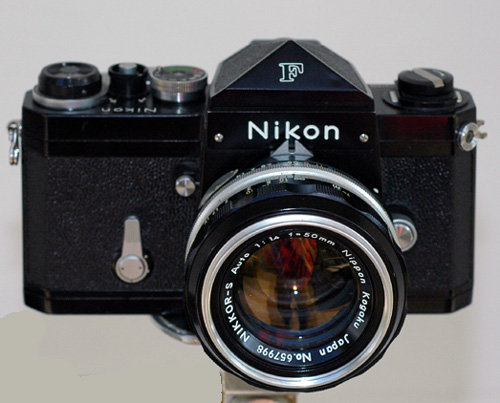
Nikon F 1959
Film camera
Once Nikon introduced affordable consumer-level DSLRs such as the Nikon D70 in the mid-2000s, sales of its consumer and professional film cameras fell rapidly, following the general trend in the industry. In January 2006, Nikon announced it would stop making most of its film camera models and all of its large format lenses, and focus on digital models. Nevertheless, Nikon is the only major photo camera manufacturer still making film SLRs. The remaining model is the professional Nikon F6 with the last amateur model, FM10, having been discontinued. 
Compact cameras 
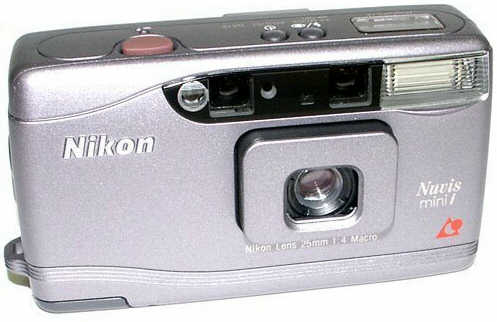
Nikon Nuvis
Between 1983 and the early 2000s a broad range of compact photo cameras were made by Nikon. Nikon first started by naming the photo cameras with a series name (like the L35/L135-series, the RF/RD-series, the W35-series, the EF or the AW-series. In later production cycles, the photo cameras were double branded with a series-name on the one and a sales name on the other hand. Sales names were for example Zoom-Touch for cameras with a wide zoom range, Lite-Touch for ultra compact models, Fun-Touch for easy to use photo cameras and Sport-Touch for splash water resistance. After the late 1990s, Nikon dropped the series names and continued only with the sales name. Nikon's APS-cameras were all named Nuvis.
The photo cameras came in all price ranges from entry-level fixed-lens-cameras to the top model Nikon 35Ti with titanium body and 3D-Matrix-Metering.

 information from wikipedia.org


Mar 26, 2011

PHOTO LESSONS : Camera basics

All photo cameras from the simplest to the highest of high tech share some basic features.
Lens. The lens is made up of layers of glass which are each shaped to focus incoming light onto a surface used to expose the image.
Light sensitive medium. In digital photo cameras this is a sensor – which comes in a variety of types but all basically change light into an electrical signal. In film cameras, the exposure takes place on, you guessed it, film.
A variably sized hole call the aperture. Located in the lens, the aperture control is a series of blades which changes the amount of light passing through lens. The aperture’s basic unit of measurement for how much light is getting through is the “ƒ Stop.” A whole Stop change in aperture lets in either half as much light or twice as much light. On your lens (or in the view finder, or maybe on an LCD menu on your camera) you typically see numbers like ƒ1.8, ƒ2.8, ƒ4, ƒ5.6, ƒ8, ƒ11, ƒ16, and ƒ22. These are whole Stops which, as previously explained, lets in twice as much or half as much light compared to the Stop beside it.
 A shutter which limits how much time light is allowed to enter your light-tight box. The measurement for the shutter is the “shutter speed,” also known as Stops, which is measured in fractions of a second like 1/30th, 1/60th, 1/125th, 1/250th, 1/500th and so on. You can see a little easier how each might vary the exposure by either half as much light, or twice as much. Exposure times can also vary from 1/8000th of a second to several seconds. Some systems can use up to hours of exposure
When hand holding the camera, its important to make sure the shot is not blurry from camera shake. You should have the shutter set to the “same number” as you lens length. For example, if using a 50mm lens, you want a shutter speed of at least 1/60th of a second. If you’re using a 135mm lens, 1/125th is okay, but 1/250th would be better. I’ve found with digital, because most have a multiplier effect (the sensor is smaller than 35mm film, and effectively make the lens 50 per cent longer) you need to set the shutter accordingly. If using a 50mm lens on a digital SLR, I set the shutter to the half stop of 1/90th or faster.
If you don’t have enough light for the exposure I recommend a sturdy tripod. If you have a questionable speed, you can try bracing yourself against a post, tree, or other stationary object. I never stop from taking the shot even when I’m doubtful, you never know – you might get a great shot anyways.
A light tight box. Holding the lens, shutter and exposure medium, the body of the photo camera keeps light out. On most photo cameras, the body also holds electronics to control the aperture and shutter.
The meter will help you determine the exposure you need. This is not something you can use on all photo cameras – particularly very old SLR’s and most point-and-shoot style photo cameras. The meter may be part of the photo camera’s system, but not have any visible meter for the photographer to use. However, most serious photo cameras do have a display for the meter so you can determine your exposure.
The most important part of the photo camera is the six inches BEHIND the viewfinder (assuming you use the viewfinder, if you normally look at the LCD on the back of your digital camera that would change to about 18 inches.)
A note about Stops. On modern photo cameras, there are numbers for additional fractions of a Stop, which can be either 1/2 Stops or 1/3rd Stops. This makes learning your stops a little more complicated but the principal still works.
Almost everything else on modern cameras is a way to control the focus of the lens, the aperture or the shutter speed. On digital cameras there is one last control which is to set the colour temperature. This will be explained later in another lesson.
If you’re using a modern digital SLR, or a film SLR with a lot of automation on it, I highly recommend you read your photo camera’s manual closely to find out how to do basic control of: setting the photo camera to manual exposure, setting the lens aperture, and setting the shutter speed. These three areas are important for getting the most out of these lessons.
If you are using a pocket photo camera or point-and-shoot style  photo camera, you can set these features on some but not all photo cameras of this type.
information taken from  www.bestphotolessons.com